


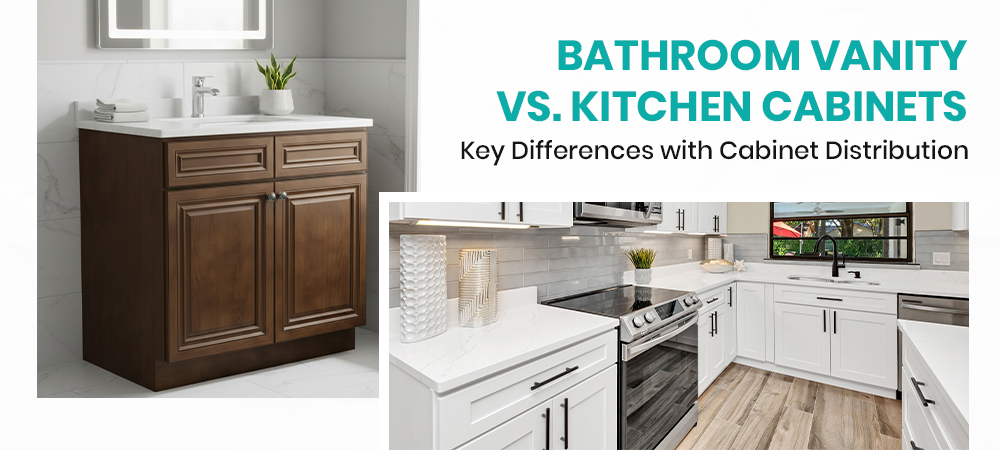
Bathroom cabinets are shallower, shorter, and built to withstand humidity. Kitchen cabinets are deeper, taller, and designed for heavy-duty storage.
Kitchen vs. Bathroom Cabinets: Key Differences Homeowners Must Know
Posted:
December 30, 2025
Categories:
Guides
Blog Overview
Choosing the right cabinets can make a big difference in a remodel. Many homeowners don’t realize how different bathroom and kitchen cabinets really are. Key considerations are:
- Cabinet dimensions
- Storage needs
- Material durability
- Style & design
- Installation & cost
When planning a remodel, it’s easy to assume kitchen and bathroom cabinets are basically the same. They may look similar, but manufacturers build them differently. Understanding these kitchen cabinet differences helps homeowners choose cabinets that are safe, functional, and long-lasting.
Size and Standard Dimensions
Cabinet dimensions are one of the biggest differences between kitchen and bathroom cabinetry.
Kitchen Cabinet Dimensions
- Base cabinets: 34.5" height (36" with countertop)
- Depth: 24" standard
- Width options: 9"–48" in 3" increments
Kitchen cabinets are designed to fit your appliances, hold your cookware, and make cooking and meal prep easier.
Bathroom Vanity Dimensions
- Vanity height: 31"–34" (often slightly shorter than kitchens)
- Depth: 18"–21" standard
- Widths: Commonly 24", 30", 36", 48", and 60"
These shallower, shorter cabinets fit tighter floor plans and align with sink plumbing.
Why Size Matters:
- Kitchen cabinets need space for appliances and deep storage.
- Bathroom vanities must allow plumbing clearance and comfortable grooming height.
- Countertop height greatly affects usability in both rooms.
Storage & Daily Use Requirements
Kitchen and bathroom storage needs differ dramatically.
Kitchen Storage Needs
- All your pots, pans, mixers, and everyday small appliances
- Room for food, pantry staples, and big storage needs
- Frequent opening and closing
- Specialized inserts: pull-outs, spice racks, tray dividers, waste bins
Bathroom Storage Needs
- Toiletries and skincare
- Medicine and personal care items
- Towels and linens
- Lighter storage load
- Optional organizers: drawer trays, open shelves, tilt-out trays
Moisture & Cabinet Material Durability
Bathrooms deal with constant humidity. This makes moisture performance key.
Bathroom Cabinet Considerations
Must resist: humidity, steam, splashes
Risk of: warping, swelling, finish peeling
Best cabinet materials:
- Moisture-resistant MDF
- Marine-grade plywood
- Sealed finishes
- PVC or waterproof options for high-moisture homes
Kitchen Cabinet Durability Needs
Kitchens face heat, grease, frequent cleaning, and heavy items. Cabinets should handle:
- Weight
- Movement
- Daily wear
Style & Design Differences
Kitchen Styles
- Larger, more open layouts
- The focal point of the house
- Cabinet choices heavily influence home resale value
Bathroom Styles
- Designed around plumbing
- Compact layouts with specific sink and fixture considerations
- Floating vanities, wall-mounted options, or furniture-style designs
Should Your Kitchen & Bathroom Match?
Many designers recommend coordinating finishes, not duplicating them. Matching styles can create a sense of cohesion, making your home feel thoughtfully curated. For example, using similar cabinet finishes, hardware, or color palettes can tie spaces together visually, even if the rooms serve very different functions.
Coordinating vs. Copying
Bathrooms often have different needs, like:
- moisture resistance
- space constraints
- vanity-specific layouts
While kitchens prioritize:
- storage
- workflow
- appliance integration
Instead of trying to make the rooms identical, consider coordinating elements. This approach allows your home to feel unified while giving each space the flexibility to shine on its own, balancing style, function, and individuality.
Installation & Cost Considerations
Kitchen Cabinet Installation
- More cabinetry required
- Requires appliance clearance
- More labor-intensive
- Electrical + plumbing coordination
Bathroom Vanity Installation
Must accommodate plumbing, P-trap placement, and moisture barriers. Sink style affects installation:
- Drop-in
- Undermount
- Vessel bowl
Why Cost Differs?
Kitchen cabinets cost more because of size, quantity, and added complexity. Bathroom vanities cost less but require careful moisture protection.
What Drives the Price Difference?
The cost of cabinets varies significantly between kitchens and bathrooms because of differences in size, quantity, and functional demands. Kitchen cabinets are generally:
- larger
- more numerous
- include specialized features
- pull-out shelves
- appliance integration
- intricate hardware
On the other hand, bathroom vanities tend to be:
- smaller
- fewer in number
However, they require careful attention to moisture resistance, as bathrooms are high-humidity environments. Understanding these factors helps homeowners plan their budget more realistically and choose materials that balance durability and style.
Can You Use Kitchen Cabinets in a Bathroom?
Yes, kitchen cabinets can be used in bathrooms, but only with modifications.
Pros
- More storage (deeper cabinets)
- Higher vanity height (can be more ergonomic)
- More style options
Cons
- Depth may create tight clearances.
- Not all cabinet materials withstand humidity.
- Plumbing cutouts may weaken structural integrity.
When It Works
- You have the space for a 24" depth.
- You seal and protect materials.
- Proper ventilation exists.
- You modify the plumbing safely.
Quick Comparison
| Characteristic | Kitchen Cabinets | Bathroom Cabinets |
|---|---|---|
| Standard Height | 34.5" (36" with countertop) | 31–34" |
| Standard Depth | 24" | 18–21" |
| Moisture Exposure | Moderate (heat & grease) | High (humidity & splashes) |
| Storage Type | Heavy cookware, food, appliances | Toiletries, towels, skincare |
| Material Priority | Structural strength | Moisture resistance |
| Installation Difficulty | Higher | Moderate |
| Cost | Higher overall | Lower overall |
Major Takeaways
Selecting the right cabinet type is essential for durability, safety, and everyday usability. Kitchens and bathrooms have unique structural and moisture demands. Choosing a bathroom vanity vs. kitchen cabinets designed specifically for each room ensures the best long-term results.
Browse Cabinet Distribution's selection of moisture-resistant bathroom vanities and durable kitchen cabinets designed to last. DL Cabinetry has options for every style, layout, and budget.
FAQs
What’s the biggest difference between bathroom vanities vs. kitchen cabinets?
Can I use a kitchen cabinet as a bathroom vanity?
Yes, if properly modified for plumbing and moisture-resistance.
Are bathroom cabinets cheaper than kitchen cabinets?
Typically, yes, because their smaller size means you need less of them.
What cabinet materials are best for high-humidity bathrooms?
Plywood, moisture-resistant MDF, and fully sealed finishes.