


RTA kitchen cabinets are flat-packed cabinets that you assemble and install yourself.
DIY RTA Cabinets: Expert Installation Tips & Mistakes to Avoid
Posted:
March 30, 2026
Categories:
Guides
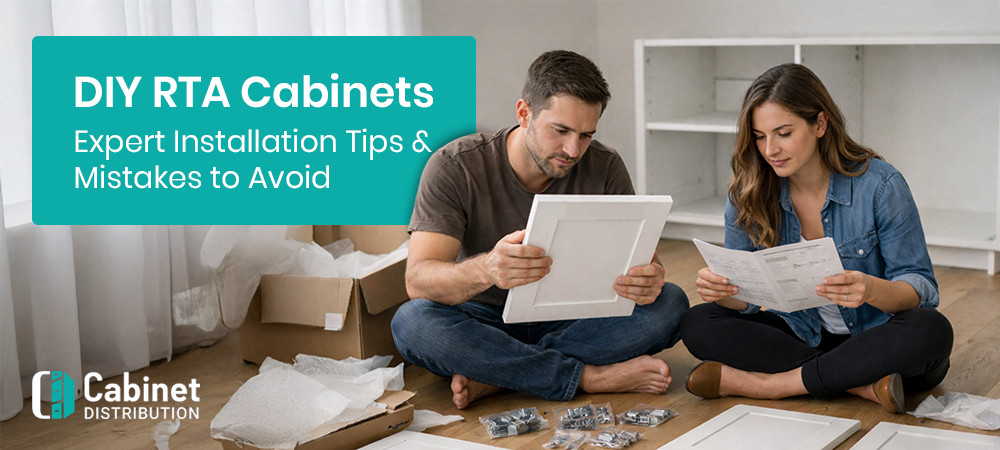
DIY RTA Cabinets: Expert Installation Tips & Mistakes to Avoid
Ready-to-assemble cabinets are a cost-effective, popular choice for homeowners. More homeowners are taking on the installation process themselves than ever before. Achieving a professional-looking result requires accurate planning, the right tools, and knowledge of common mistakes to avoid.
Here’s how to install RTA kitchen cabinets like a professional.
1. Plan Before You Build
Before unpacking your cabinets, take time to plan your layout. Measure your space multiple times, recording:
- Wall lengths
- Corners
- Plumbing
- Power outlets
A detailed floor plan ensures you:
- Order the right cabinet sizes
- Prevent expensive corrections
Tip: Mark cabinet positions with a level and chalk line to create a straight, even baseline on the wall.
2. Choose Quality RTA Cabinets
Look for products with:
- Sturdy construction
- Solid hardware
- Clear assembly instructions
Pay attention to materials. For instance, plywood boxes with dovetail joints are stronger and more durable than particleboard options.
Tip: Read reviews and ask suppliers about warranty coverage.
3. Assemble Cabinets Carefully
For beginners, expect to spend 30–45 minutes per cabinet. For more experienced installers, it’ll take about 10–20 minutes per cabinet. Rushing this step can lead to:
- Misaligned doors
- Warped panels
- Stripped screws
Lay out all components and hardware and follow the instructions step by step. Properly assembled RTA cabinets can last 20–30 years.
Avoid: Skipping the pre-drill step when joining panels. Always pre-drill holes to prevent splitting the wood.
4. Level and Secure Cabinets Correctly
One of the biggest challenges in cabinet installation is ensuring everything is level and square. Uneven cabinets can cause doors to:
- Misalign
- Stick
- Look crooked
Pro Tip: Use shims to adjust cabinets against walls that may not be perfectly straight. Secure the cabinets to studs using long screws for maximum stability.
5. Pay Attention to the Small Details
Small details make a major difference in a DIY RTA cabinet project:
- Align the drawer slides
- Ensure the doors open without obstruction
- Mount the handles straight
- Test each drawer and door
Common Mistake to Avoid: Attaching hardware before verifying alignment. Always dry-fit doors and drawers first to make adjustments easier.
6. Perfect Your Shimming and Squaring Technique
Even if your cabinets are perfectly built, your walls and floors rarely are. Most homes have slight bows in the drywall or imperfections in the subfloor.
- Use Wood Shims: Slide shims behind or beneath the cabinet until it is perfectly level and plumb.
- Check for Square: Measure diagonally from corner to corner across the front of the cabinet box.
- Bridge the Gaps: Fill gaps with shims before tightening screws.
Avoid: Over-tightening screws into a void. This can crack the cabinet frame or pull the box out of alignment.
Pro Tip: Use a long straightedge across multiple cabinets to ensure a flat run.
7. Take Your Time with Finishing Touches
- Trim
- Molding
Use a soft cloth to clean surfaces and apply touch-ups for a flawless finish.
Why Choose Cabinet Distribution?
- Plywood cabinet boxes
- Solid wood components
- Precision manufacturing
- User-friendly assembly
Major Takeaways
With proper planning, quality materials, and attention to detail, DIY RTA cabinet installation can deliver professional results.
Frequently Asked Questions
What are RTA kitchen cabinets?
Are RTA cabinets difficult to install?
No, most RTA cabinets are DIY-friendly.
What tools do I need for RTA cabinet installation?
Basic tools include drill, level, measuring tape, stud finder, clamps, and shims.
How long does RTA cabinet installation take?
Typically, 2–4 days total for assembling and installing RTA kitchen cabinets.
What’s the biggest mistake to avoid?
Skipping leveling. Uneven RTA cabinets cause alignment and function issues.
Do you need to secure cabinets to wall studs?
Yes, always anchor cabinets to wall studs for a safe cabinet installation.